HF-Bewegung
Typen und Prinzipien wiederaufladbarer Batterien
Der Markt bietet verschiedene Arten von wiederaufladbaren Batterien für die private/gewerbliche Energiespeicherung an, solarbetriebene Batterie, tragbares Kraftwerk, usw. Wie Lithiumeisenphosphat, ternäres Lithium, flüssige Bleisäure, kolloidale Bleisäure, und mehr. Diese Batterien speichern und geben Energie durch chemische Reaktionen ab, die in der Batterie wiederholt oxidiert und reduziert werden.

Eine wiederaufladbare Batterie besteht aus drei Hauptteilen: Die positive Elektrode, die negative Elektrode, und der Elektrolyt. Der Elektrolyt trennt die positive und negative Elektrode, Dadurch können sich Ionen zwischen ihnen bewegen. Beim Laden, Eine externe Stromquelle sendet Strom in die Batterie. Dieser Prozess führt dazu, dass Ionen in der positiven Elektrode oxidieren, während sich die Ionen in der negativen Elektrode reduzieren, Dadurch wird die gespeicherte Energie erhöht. Umgekehrt, während der Entladung, Die Batterie gibt Strom ab. Dies führt zur Reduktion von Ionen in der positiven Elektrode und zur Oxidation von Ionen in der negativen Elektrode, Dies führt zu einer verringerten gespeicherten Energie in der Batterie.
Akkulaufzeit
Eine Batterie durchläuft einen Zyklus, wenn sie leer ist 100% Zu 0% und dann wieder aufgeladen 100%. Die Zyklenlebensdauer einer Batterie gibt an, wie oft sie diesen Vorgang durchlaufen kann, bevor ihre Kapazität nachlässt 80% unter bestimmten Lade- und Entladebedingungen von seinem Original abweichen, wie Entladestrom, Temperatur, Abschaltspannung, usw.
Verschiedene wiederaufladbare Batterien haben unterschiedliche Lebensdauern. Zum Beispiel, Ternäre Lithiumbatterien können lange aushalten 1,500 Zyklen, Lithium-Eisenphosphat-Batterien bis zu 2,000 Zyklen, während Blei-Säure-Batterien nur etwa auskommen 800 Zyklen.

Faktoren, die die Batterielebensdauer beeinflussen
Verschiedene Faktoren beeinflussen die Batterielebensdauer, wie die Entladungstiefe, Ladezustand, Lade-/Entladerate, Anzahl der Zyklen, und Temperatur.
Anzahl der Zyklen
Da die Batterie mehr Zyklen durchläuft, seine Leistung und Lebensdauer nehmen allmählich ab. Es ist wichtig zu beachten, dass Zyklen nicht mit der Anzahl der Ladungen gleichzusetzen sind.
Entladungstiefe (DoD)
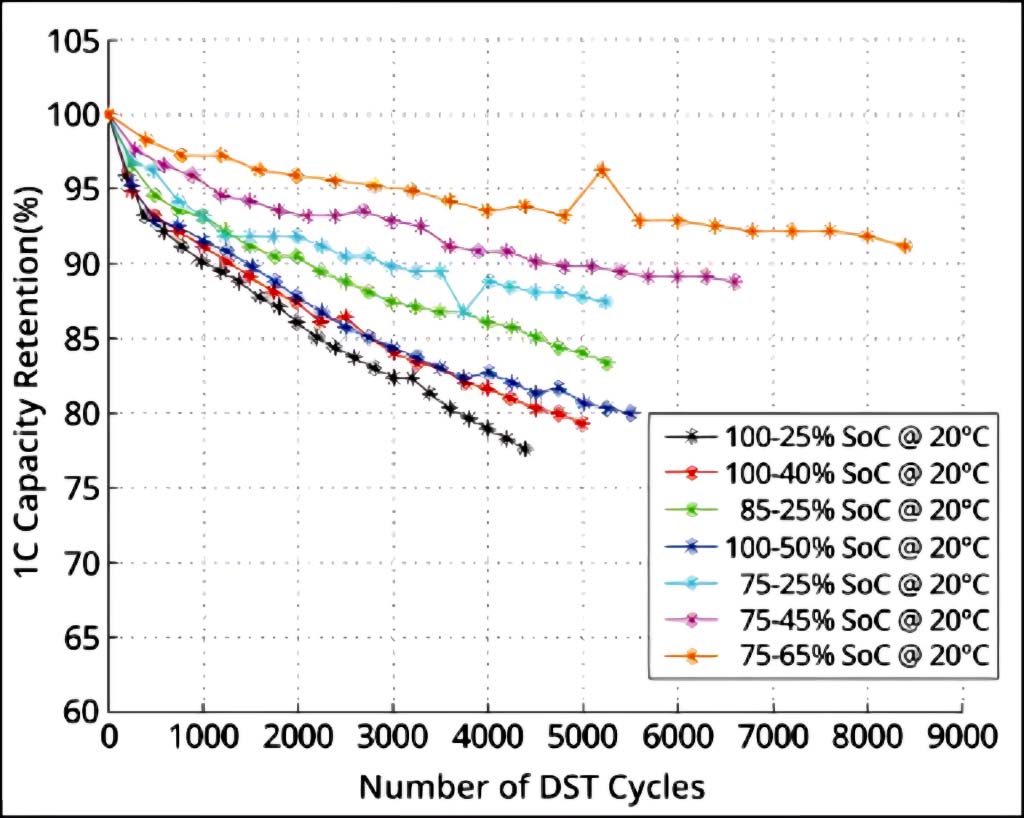
Dies bezieht sich auf den Prozentsatz der Batterieentladung im Verhältnis zu ihrer Nennkapazität. Ein DoD von 100% bedeutet, dass der Akku vollständig entladen ist, während 0% bedeutet eine volle Ladung. Zur Optimierung der Akkulaufzeit, streben Sie flache Abflüsse an (25%~75 % Bereich) statt Tiefentladungen. Das Laden und Entladen in kleineren Schritten ist dem vollständigen Entladen und anschließenden Aufladen des Akkus vorzuziehen. Im Vergleich zu Tiefentladungen verlängern flache Entladungen im Allgemeinen die Lebensdauer der Batterie.

Ladezustand (SoC)
Es zeigt die verbleibende Kapazität des Akkus im Vergleich zu seiner vollen Kapazität an, gemessen in Elektrizität. SoC bei 0% bedeutet, dass die Batterie vollständig entladen ist, während 100% bedeutet, dass es vollständig aufgeladen ist. Die Spannung ist direkt mit der Leistung verbunden: Eine höhere Leistung entspricht einer höheren Spannung. Niederspannung verzögert die Kalenderalterung und die Zyklusalterung.
Laden und Entladen bei geringem Stromverbrauch (Stromspannung) Reichweite, bei gleicher Entladungstiefe, neigt dazu, die Lebensdauer der Batterie im Vergleich zu Hochleistungsbatterien zu verlängern (Stromspannung) Bereiche. Ein anhaltend hoher SoC kann die Ausfällung von Lithiumionen beschleunigen, Reduzierung der aktiven Lithium-Ionen und Verringerung der Batteriekapazität. Umgekehrt, Ein längerer niedriger SoC kann den Verbrauch der negativen Festelektrolytschnittstelle beschleunigen (SEI) Film. Dies kann zur Auflösung der Kupferfolie der negativen Elektrode führen, Es bilden sich Kupferdendriten, und beschleunigte Batterieverschlechterung
Lade-Entlade-Rate
Dabei wird der Stromfluss beim Laden und Entladen im Verhältnis zur Nennkapazität der Batterie gemessen, Dies spiegelt wider, wie schnell der Akku geladen oder entladen wird. Zum Beispiel, wenn ein Akku innerhalb einer Stunde aufgeladen wird, Die durchschnittliche Laderate beträgt 1C; Aufladen im Inneren 30 Minuten geben eine 2C-Rate an. Schnelles Laden über 1 °C kann die Lebensdauer des Akkus verkürzen. Die Entlassungsraten sind im Allgemeinen gering und geben in der Regel keinen Anlass zur Sorge.

Temperatur
Hohe Temperaturen erhöhen die Aktivität des Elektrolyten und der aktiven Materialien der Batterie, Dies führt zu Nebenreaktionen und zur Zersetzung des Elektrolyten. Dies beschleunigt den Kapazitätsverlust und kann zur Gasbildung führen, Schwellung verursachen. Umgekehrt, Niedrige Temperaturen erhöhen die Viskosität des Elektrolyten, Verlangsamung der Lithiumionenleitfähigkeit. Diese Nichtübereinstimmung der Elektronenwanderungsgeschwindigkeiten im Schaltkreis führt zu einer starken Polarisation, Dadurch wird die Lade- und Entladekapazität deutlich reduziert. Das Laden bei niedrigen Temperaturen kann zur Lithiumausfällung und Dendritenbildung auf der Oberfläche der negativen Elektrode führen, Dadurch wird die kritische Temperatur der Batterie drastisch gesenkt und das Risiko eines thermischen Durchgehens erhöht.
Möglichkeiten und Probleme zur Verlängerung der Batterielebensdauer
Die Zyklenlebensdauer einer Batterie unterliegt Einschränkungen, Bei richtiger Verwendung kann der Kapazitätsabbau jedoch verlangsamt werden, die Lebensdauer der Batterie zu verlängern. Um dies zu erreichen, Bedenken Sie Folgendes:
- Reduzieren Sie die Anzahl der Zyklen.
- Entladungstiefe oben halten 65% der Batteriekapazität.
- Vermeiden Sie eine Tiefenladung bis zur vollen Kapazität.
- Minimieren Sie schnelle Ladezeiten, und die Ladeströme senken.
- Setzen Sie intelligente Batteriemanagementsysteme ein (BMS) Ladeströme in verschiedenen Stufen zu regeln.
- Halten Sie einen angemessenen Temperaturbereich ein.
Jedoch, Die Umsetzung dieser Strategien kann je nach Nutzungsszenario zu Herausforderungen führen. Batterien sind in Situationen von entscheidender Bedeutung, in denen kein Netzstrom verfügbar ist oder mobiler Strom ohne Anschlüsse erforderlich ist. In solchen Fällen, Es wird schwierig, die Batterielebensdauer durch Reduzierung der Zyklen und der Entladetiefe zu verlängern.
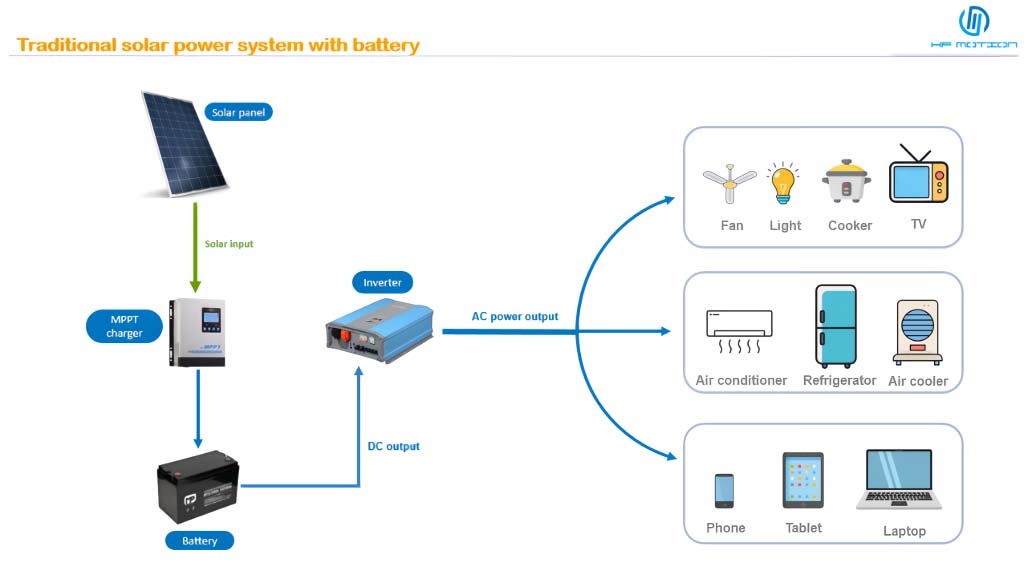
Sei es industriell, kommerziell, oder den Hausgebrauch, Batterien müssen vor der Verwendung häufig aufgeladen werden. Solarzellen, zum Beispiel, Aufgrund von Systemprozessen unterliegen sie einem ständigen Laden und Entladen. Dieser kontinuierliche Zyklus wirkt sich erheblich auf die Batteriekapazität aus und führt zu einer verkürzten Lebensdauer, häufig Unterschreitung der nominellen Zyklenzahl.
Der beste Weg, die Batterielebensdauer zu verlängern
Dann haben wir das grundlegende Problem gefunden. Das Kernproblem besteht darin, wie Batterien hauptsächlich als Notstromquellen eingesetzt werden. Bei ausschließlicher Verwendung zur Sicherung, Häufigkeit und Tiefe des Ladens und Entladens werden erheblich reduziert, Dies wirkt sich unterschiedlich auf die Lebensdauer der Batterie aus.
Bei HF Motion, Wir haben ein innovatives Solarzellensystem mit dem Namen E-Hybrid-Solartechnologie eingeführt. Dieser innovative Ansatz integriert Batterien in das Solarsystem, Ermöglicht die direkte Abgabe von Solarenergie an die Last. In diesem Setup, Die Batterie dient als Backup, anstatt die einzige Leitung für die Energieabgabe an die Last zu sein.
Wir bieten Lösungen und Produkte für den Wohnbereich, industriell, und kommerzielle Solaranlagen, unter Einbeziehung dieser bahnbrechenden Technologie.

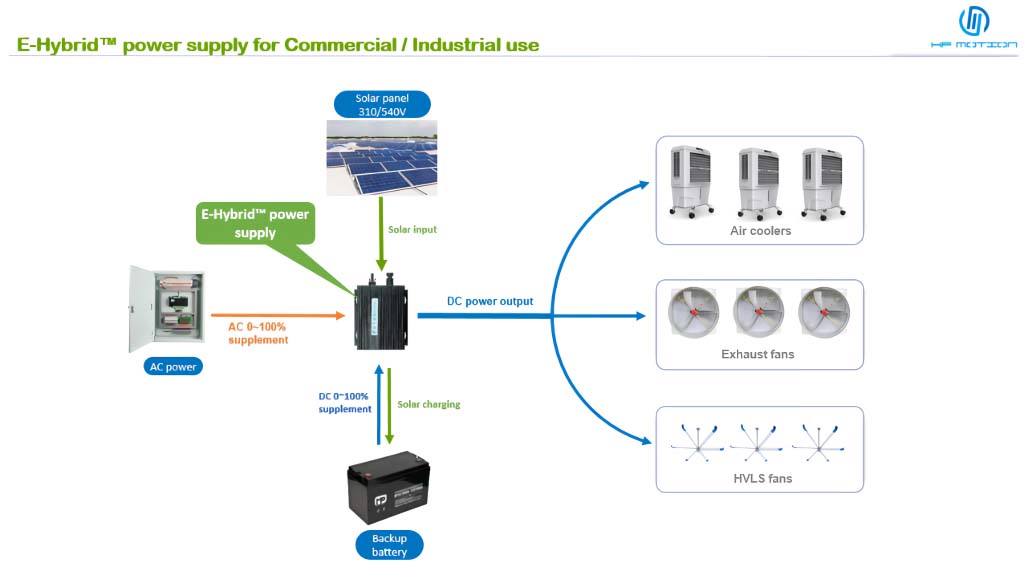
Seine Betriebsart ist wie folgt:
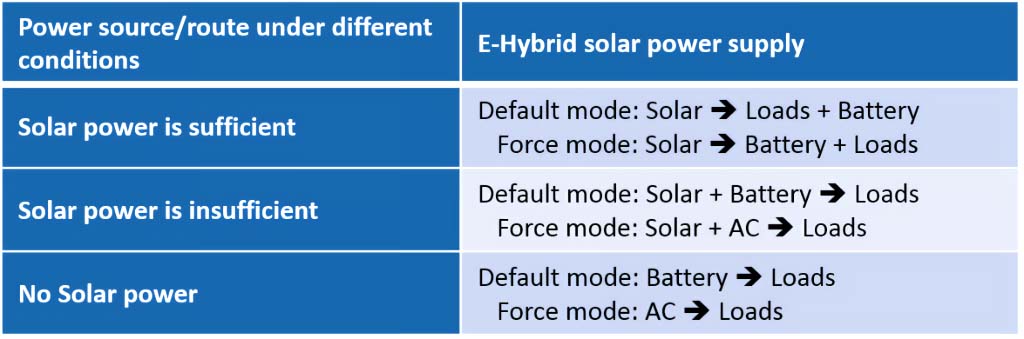
In der beschriebenen Betriebsart, Das System fungiert hauptsächlich als Solar → Lasten, gelegentlicher Übergang zu Solar + Batterie → Lasten oder Batterie → Lasten. Jedoch, Es gibt niemals einen direkten Strom von Solar → Batterie → Lasten. Dadurch wird das Problem vermieden, dass das System den Akku vor der Ausgabe laden muss.
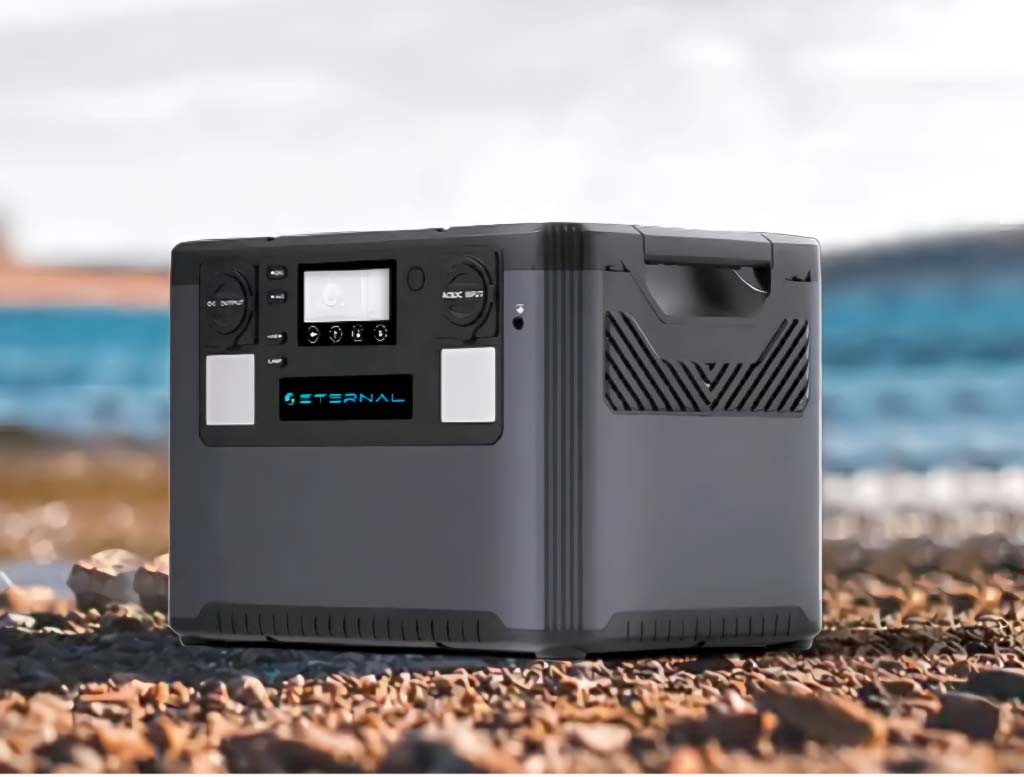
Über die genannten Systeme hinaus, Neben MPPT-Modulen und Wechselrichtern bieten wir auch tragbare solarbetriebene Batterien mit E-Hybrid-Technologie an. Diese Geräte verfügen über Lithium-Eisenphosphat-Batterien mit Kapazitäten von 1000 bis 2000Wh. Sie decken verschiedene Szenarien wie Haushaltsstrom ab, Camping im Freien, und Feldeinsätze.
Das einzigartige Design ermöglicht die direkte Abgabe von Solarenergie an die Last, wann immer Sonnenlicht verfügbar ist, unter Umgehung der Batterie. Auch wenn die Batterie schwach ist, Sonnenlicht ermöglicht eine direkte Ausgabe an die Last, ohne Rücksicht auf die Batterieleistung. Dieser Ansatz verlängert die Batterielebensdauer im Vergleich zu herkömmlichen mobilen Stromversorgungen erheblich. Es gewährleistet eine konstante Leistungsabgabe über verschiedene Einstellungen hinweg, Bereitstellung einer stabilen Leistung unabhängig von den Umgebungsbedingungen.