Movimento HF
Perché il condizionatore solare?
I condizionatori d’aria sono spesso gli elettrodomestici che consumano più energia nelle case, perché spesso d'estate rimangono accesi a pieno carico per lungo tempo. Per esempio, la famiglia più comune da 12000btu consuma 10kwh~20kwh al giorno, and energy shortages often lead to a sharp increase in electricity bills in areas where air conditioners are used. Per esempio, in typical areas with higher temperatures such as Africa, West Asia, and South Asia, high electricity prices make people reluctant to consume air conditioners.
Inoltre, many areas not only have high electricity prices, but also unstable supply due to lack of electricity, and frequent irregular power outages are also a problem. Spesso, even if air conditioners are installed, they can only be maintained by oil-generated electricity, and oil-generated electricity further increases the daily consumption of air conditioners.
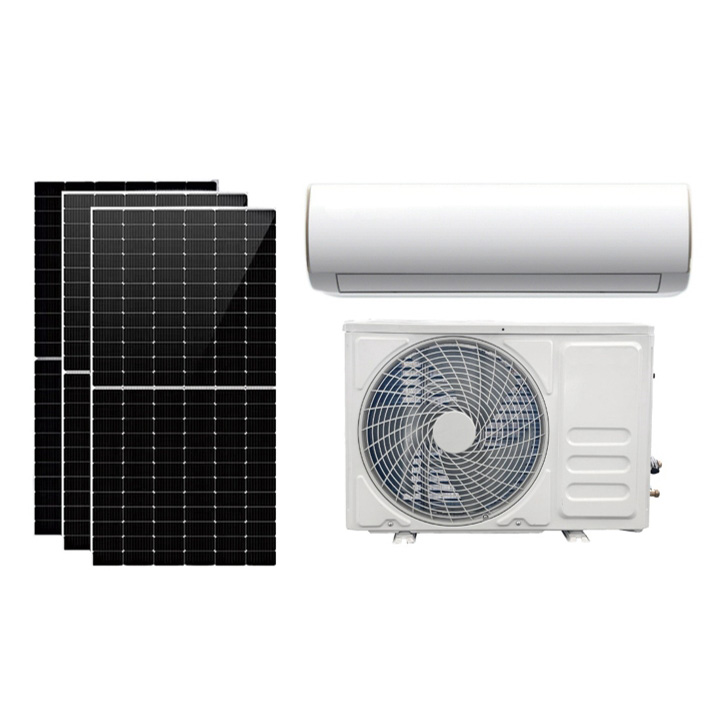
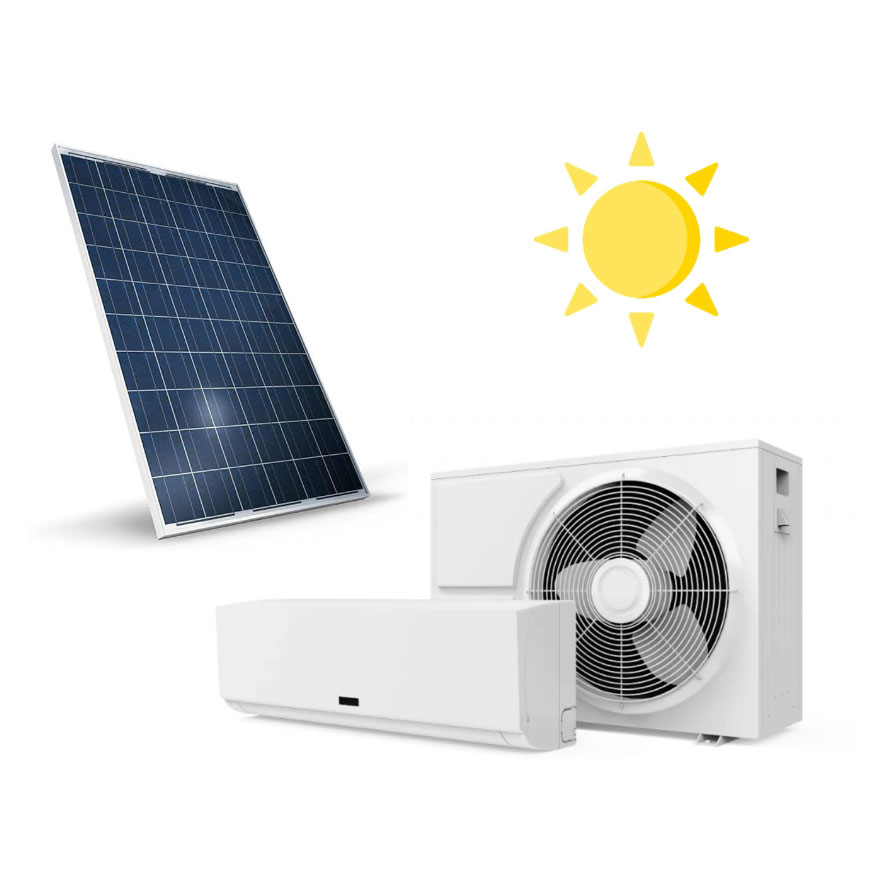
In recent years, with the vigorous development of photovoltaic technology, many companies have launched photovoltaic air conditioners, che è davvero una buona scelta per risolvere la calda estate. Utilizzo dell'energia verde fotovoltaica per azionare i condizionatori d'aria, soprattutto con un certo numero di accumulatori di energia, può raggiungere 0 consumo di energia elettrica di rete, risparmiando notevolmente il costo.
Il problema della divulgazione dei tradizionali condizionatori d'aria solari
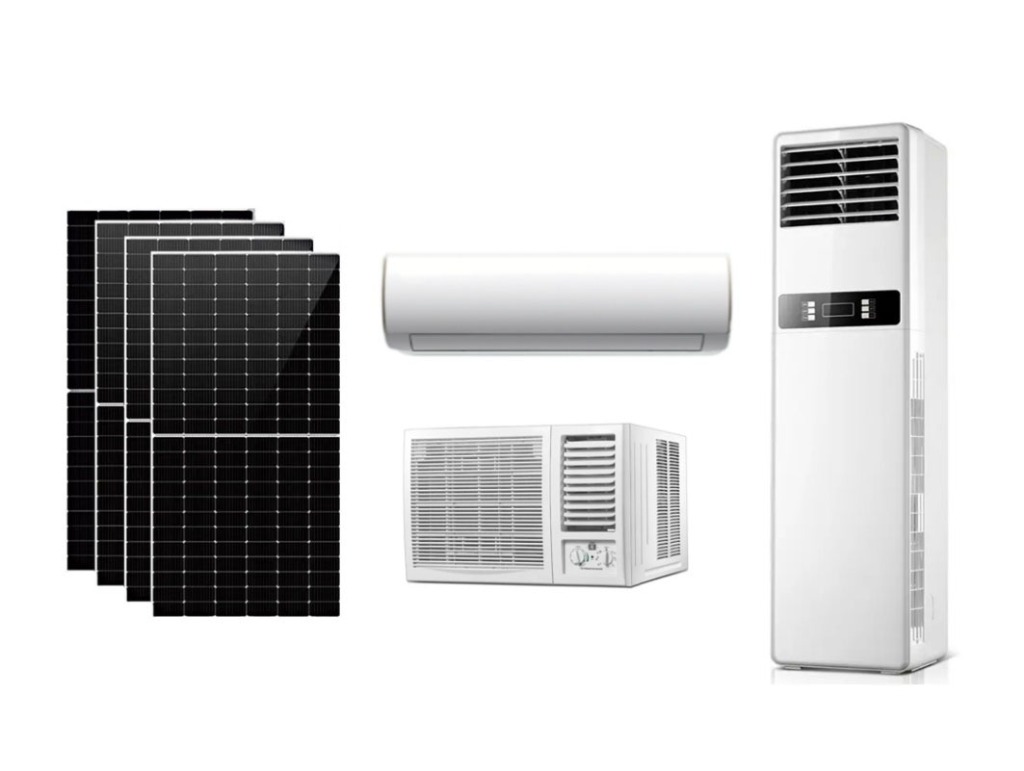
Esistono due tipi principali di condizionatori solari sul mercato:
1. Condizionatore solare a commutazione AC/DC
Questo sistema non ha accumulo di energia ed è collegato sia all'energia solare che alla rete elettrica. Quando l'energia solare è insufficiente, passa alla rete elettrica.
- Il modulo di gestione dell'energia è integrato nell'unità esterna, e la temperatura dell'unità esterna è molto alta, con conseguente alto tasso di fallimento e vita breve, e manutenzione scomoda;
- Solar panels and air conditioners are usually configured one-to-one. Generally, there are multiple solar air conditioners in a home. When one is running, the photovoltaic panels of other air conditioners are wasted;
- Quando l'energia solare è insufficiente, it is necessary to switch to the mains. In questo momento, all photovoltaic panels are wasted, and the cost of mains electricity increases;
- It relies on mains electricity to operate at night. It cannot operate when there is no mains electricity, which has high operating costs and poor experience.
2. Low Voltage DC System
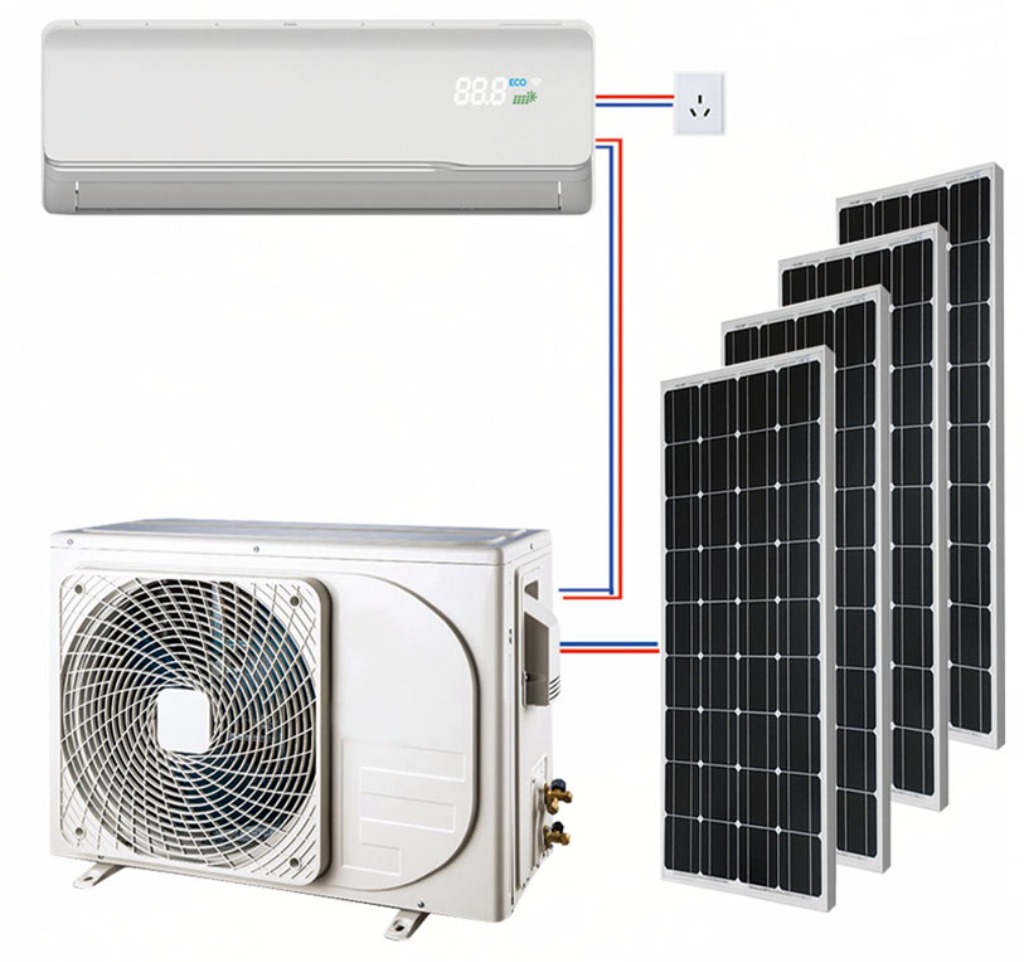
This system completely relies on solar energy, has no mains input, and can be used in conjunction with energy storage.
Disadvantages of this system:
- Completely low-voltage system, large current, high requirements for components, high heat generation, and high cost;
- It completely relies on solar energy and batteries to operate, la capacità della batteria deve essere molto grande, e il costo è molto alto;
- La batteria deve essere caricata prima dell'uso, il tasso di utilizzo del sistema è basso, e la durata della batteria è breve;
- Quando la batteria è scarica, l'energia solare non può azionare direttamente il condizionatore d'aria;
- Quando non c'è luce solare e la batteria è scarica, il condizionatore non può essere alimentato dalla rete elettrica.
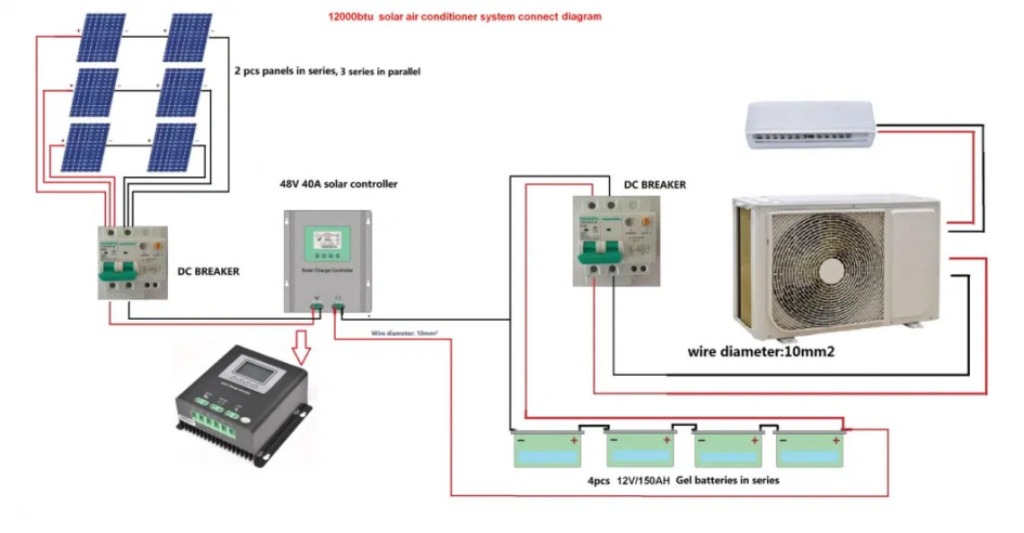
Oltre ai difetti di cui sopra, anche il costo dei condizionatori solari stessi è molto elevato. Prendiamo come esempio un condizionatore solare da 12000Btu, il prezzo di canale di un condizionatore d'aria con commutazione AC/DC è di circa 500 dollari. Il prezzo complessivo di un condizionatore DC a bassa tensione più una batteria è di circa 750 dollari. Fondamentalmente, il prezzo di un condizionatore solare è equivalente al prezzo di 2-3 normali condizionatori d'aria. At this cost, it is impossible to popularize it in ordinary households.
How to Make Users Accept Solar Air Conditioner?
If home appliance brands want users to buy solar air conditioners like ordinary air conditioners, or even give up ordinary air conditioners to buy solar air conditioners, they need to solve the following problems:
- Significantly reduce the price of solar air conditioners.
If the price of solar air conditioners is not much higher than ordinary air conditioners, users with rigid needs are willing to pay a higher price to buy them. Even users without rigid needs will buy them;
2. It must be really power-saving.
As we all know, solar energy is unstable. Quando l'energia solare è bassa, the air conditioner needs to switch to the mains, which wastes solar energy and generates mains costs. If we can solve this problem , the solar air conditioner can reflect its true value;
3. Add an energy storage interface.
This new configuration can use air conditioners when there is no electricity or light.However, the energy storage capacity needs to be smaller. After all, it is not the main energy source, so the cost of energy storage needs to be reduced.
Why E-Hybrid Solar Air Conditioner Will Become More Popular
IL E-Hybrid solar air conditioners are powered by the E-Hybrid tech, AC & DC coupled power supply, not AC/DC switching.
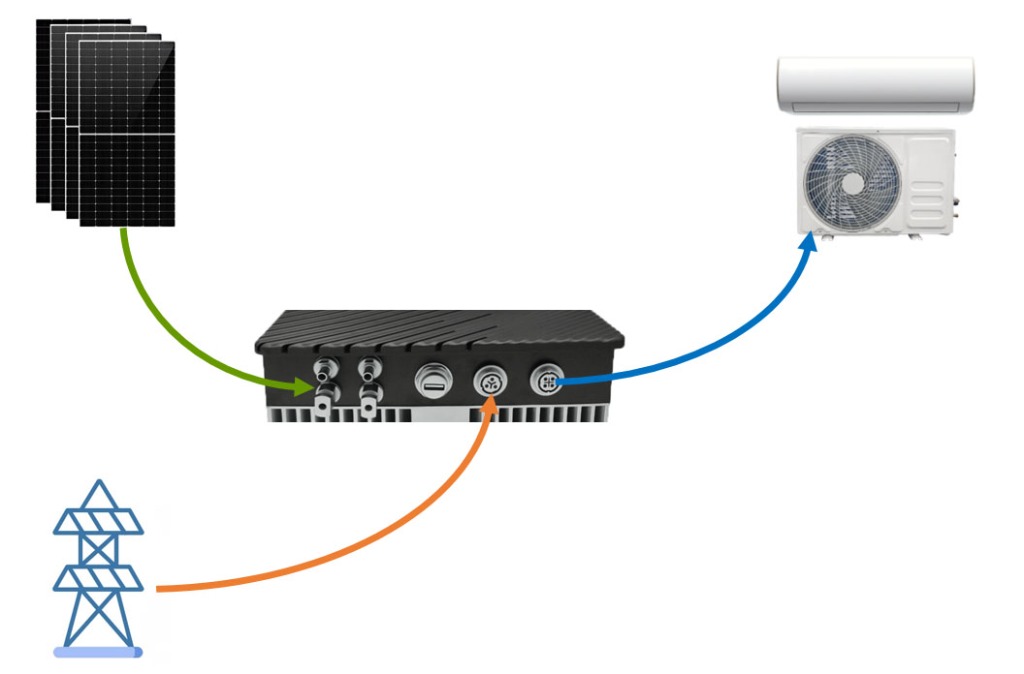
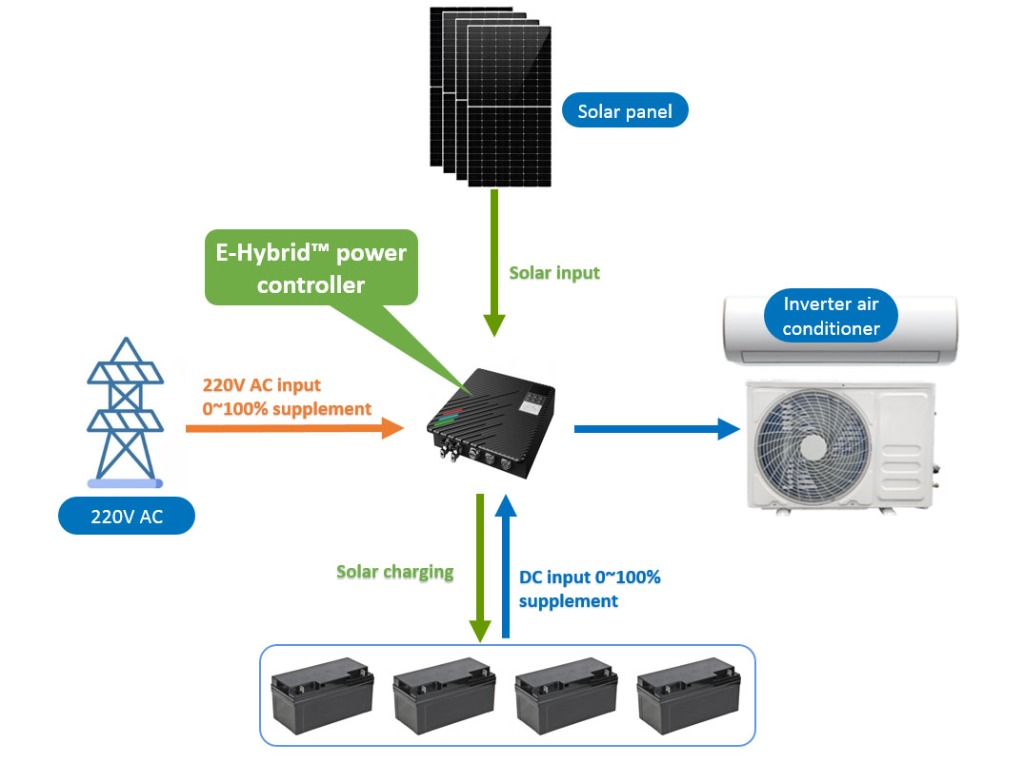
In order to make E-Hybrid solar air conditioner popular, we give it 4 core features and advantages:
- Extremely Energy-saving: Energia solare, AC mains, and battery complement each other. Solar energy and battery are prioritized, and almost no mains are used;
- Never Stop: Solar energy is prioritized.Energy storage is added, and it complements solar energy and AC mains. It can run almost 24 hours without mains.
- Low price: The price of our E-Hybrid solar air conditioner is only slightly higher than ordinary air conditioners. Most users can afford it.
- Strong Versatility: It can be used only by connecting to AC mains. Even if you dont have solar panels, you can buy E-Hybrid solar air conditioner and make plans for the future.
prodotti correlati