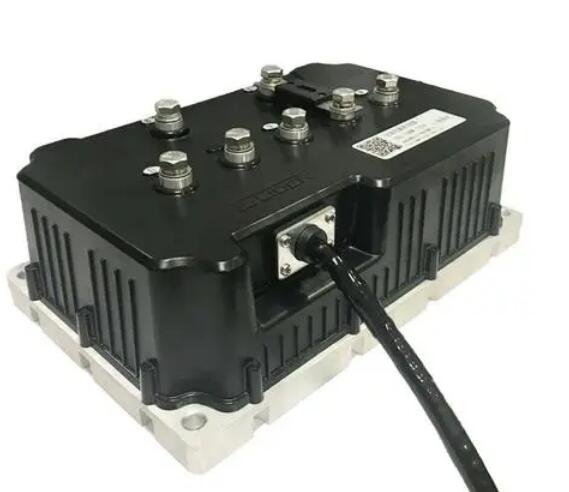
HF Motion
An inverter is designed to convert direct current energy into alternating current, typically a 220/110V, 50/60Hz sine wave. It consists of an inverter bridge, control logic, and filter circuit. Essentially, an inverter acts as a DC-AC transformer, achieving voltage inversion through a conversion process.
A converter is responsible for converting the alternating current voltage from the power grid into a stable DC output. In contrast, the inverter transforms the DC voltage output from equipment into high-frequency and high-voltage AC.
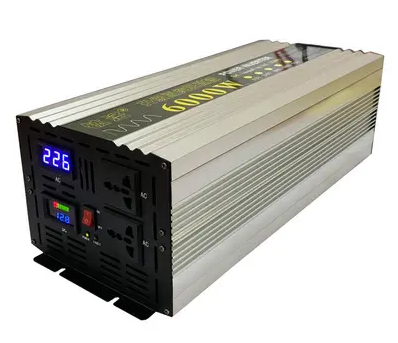
Applications:
Inverters find wide applications in various electric devices which are including the BLDC motors, such as air conditioners, electric tools, washing machines, range hoods, refrigerators, fans, pumps, industrial machines, etc.
Characteristics of inverters:
- High conversion efficiency
- Quick start function
- Excellent safety performance with various protection features like short circuit, overload, over/under voltage, and over-temperature safeguards.
- Aluminum shell offers good heat dissipation
- Surface hard oxidation treatment for enhanced friction resistance and resistance to extrusion or impact from external forces.
- Inverters also demonstrate strong adaptability and stability under varying loads.
Structure:
An inverter consists of three main parts: the inverter circuit, logic control circuit, and filter circuit. These parts incorporate elements like the input interface, voltage starting circuit, MOS switch tube, PWM controller, DC conversion circuit, feedback circuit, LC oscillation, output circuit, and load components.
Classification:
Inverters can be classified based on their waveform properties into two main types:
Sine wave inverters and square wave inverters. The sine wave inverter outputs an alternating current waveform that closely resembles or even surpasses the quality of the power grid’s everyday usage. It generates minimal electromagnetic pollution to the power grid.
In contrast, the square-wave inverter produces a square-wave alternating current with lower quality. Its positive and negative maximum values are generated almost simultaneously, leading to unstable effects on the load and the inverter itself. Square-wave inverters also have poor load capacity, supporting only 40-60% of the rated load and being unsuitable for carrying inductive loads. Moreover, the square wave’s third harmonic component can damage the power filter capacitor of the load.
To address these limitations, a quasi-sine wave (or modified sine wave, analog sine wave, etc.) inverter was developed. It produces an output waveform with a time interval between the positive and negative maximums, improving its usability. However, the quasi-sine wave waveform is still composed of broken lines and falls into the square wave category, resulting in limited continuity.
In conclusion, sine wave inverters provide high-quality alternating current suitable for driving any kind of load, but they come with higher technical requirements and costs. Quasi-sine wave inverters, on the other hand, meet most electricity demands with their high efficiency, low noise, and moderate price, making them the mainstream product in the market. Square wave inverters, being simple multivibrator constructions, have their place but lack the performance and reliability of the other types.