HF Motion
Why Solar Air Conditioner?
Air conditioners are often the most energy-consuming electrical appliances in general households, because they are often turned on at full load for a long time in summer. For example, the most common 12000btu household consumes 10kwh~20kwh a day, and energy shortages often lead to a sharp increase in electricity bills in areas where air conditioners are used. For example, in typical areas with higher temperatures such as Africa, West Asia, and South Asia, high electricity prices make people reluctant to consume air conditioners.
Moreover, many areas not only have high electricity prices, but also unstable supply due to lack of electricity, and frequent irregular power outages are also a problem. Often, even if air conditioners are installed, they can only be maintained by oil-generated electricity, and oil-generated electricity further increases the daily consumption of air conditioners.
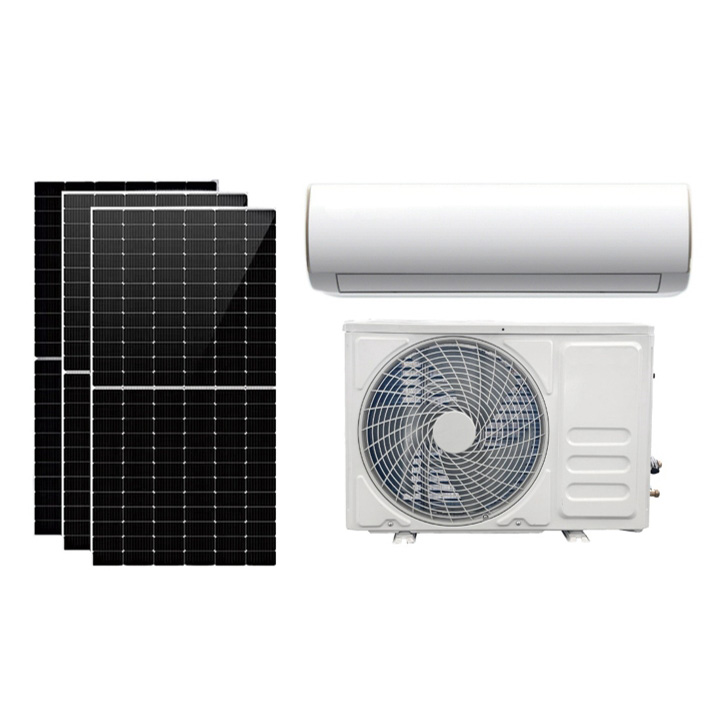
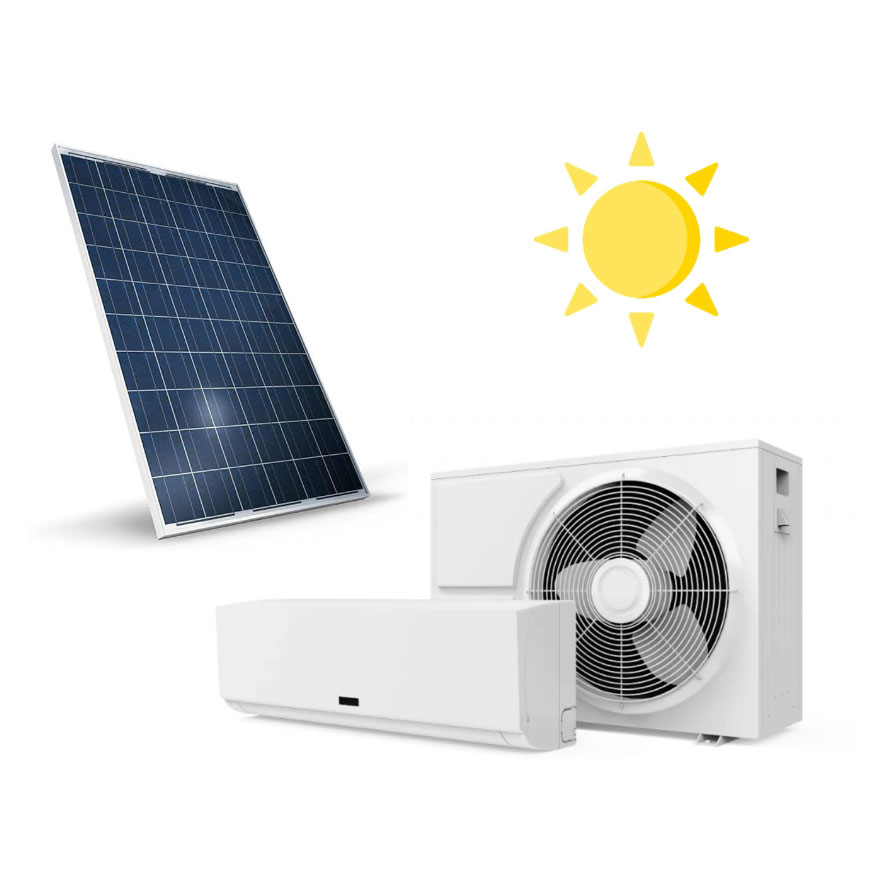
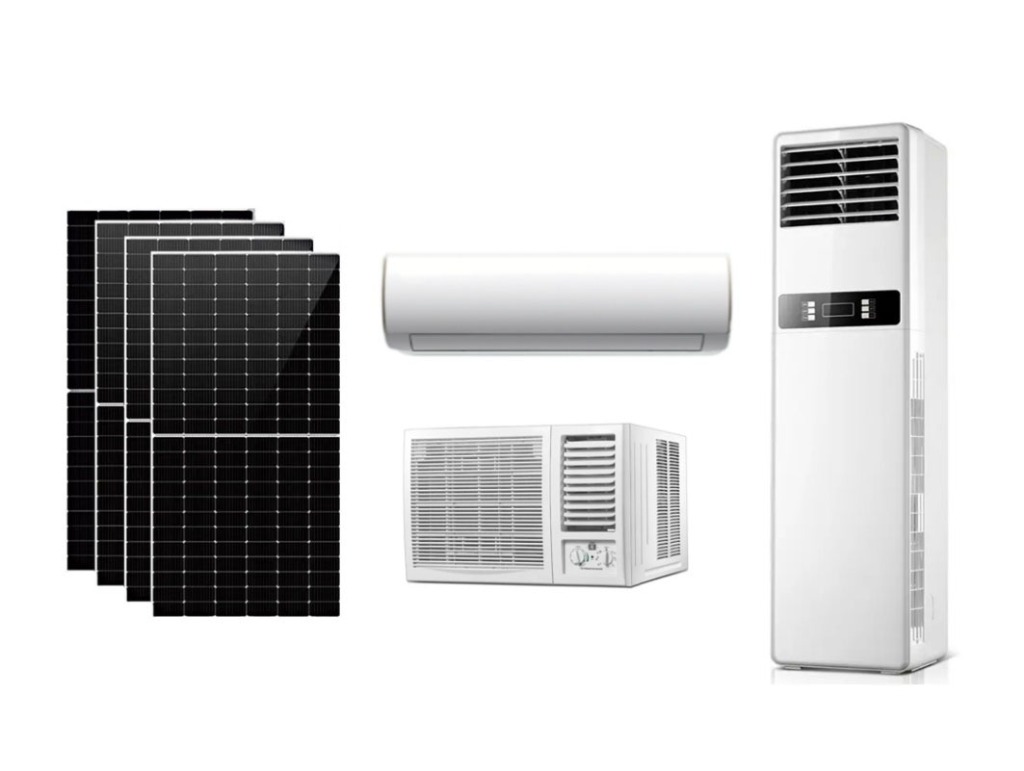
In recent years, with the vigorous development of photovoltaic technology, many companies have launched photovoltaic air conditioners, which is indeed a good choice to solve the hot summer. Using photovoltaic green energy to drive air conditioners, especially with a certain number of energy storage batteries, can achieve 0 mains electricity consumption, greatly saving the cost.
The Problem of Popularization of Mainstream Solar Air Conditioners
There are two main types of solar air conditioners on the market:
1. AC/DC switching solar air conditioner
This system has no energy storage and is connected to both solar energy and mains electricity. When solar energy is insufficient, it switches to mains electricity.
- The energy management module is built into the outdoor unit, and the temperature of the outdoor unit is very high, resulting in a high failure rate and short life, and inconvenient maintenance;
- Solar panels and air conditioners are usually configured one-to-one. Generally, there are multiple solar air conditioners in a home. When one is running, the photovoltaic panels of other air conditioners are wasted;
- When solar energy is insufficient, it is necessary to switch to the mains. At this time, all photovoltaic panels are wasted, and the cost of mains electricity increases;
- It relies on mains electricity to operate at night. It cannot operate when there is no mains electricity, which has high operating costs and poor experience.
2. Low Voltage DC System
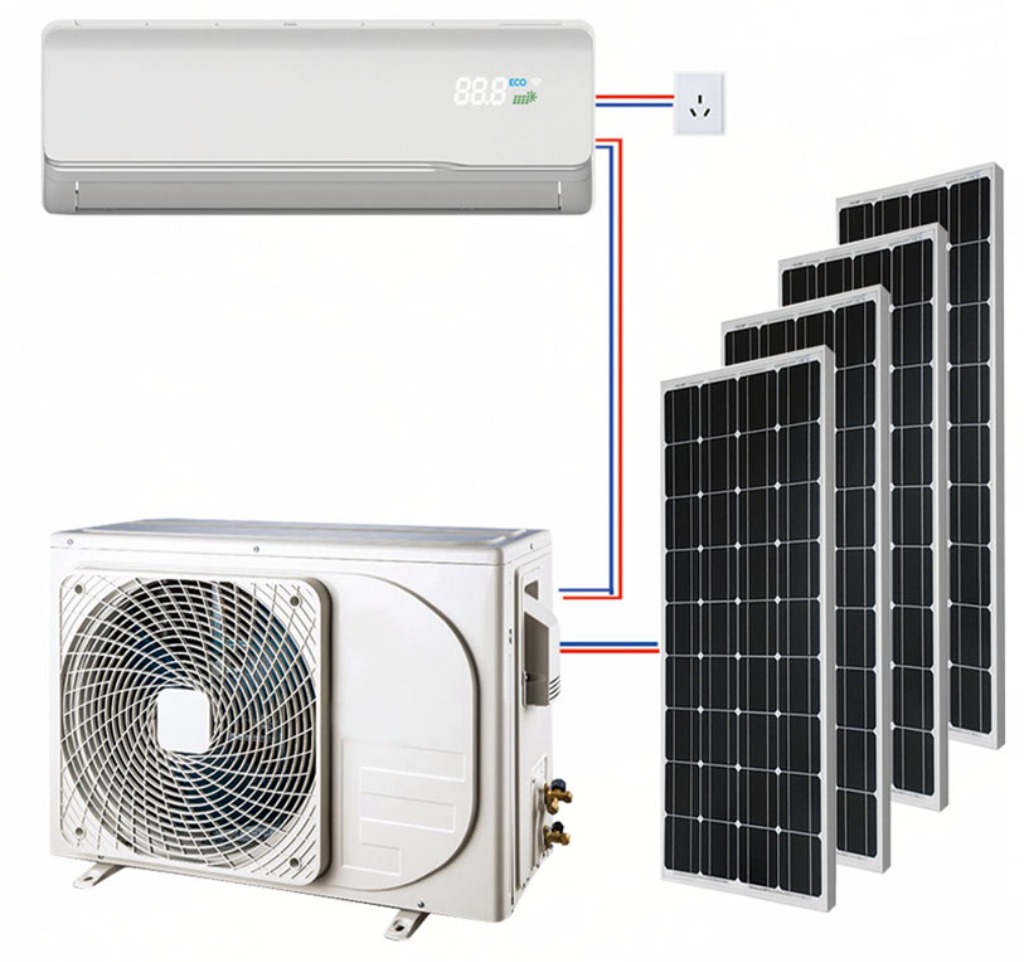
This system completely relies on solar energy, has no mains input, and can be used in conjunction with energy storage.
Disadvantages of this system:
- Completely low-voltage system, large current, high requirements for components, high heat generation, and high cost;
- It completely relies on solar energy and batteries to operate, the battery capacity needs to be very large, and the cost is very high;
- The battery needs to be charged before use, the system utilization rate is low, and the battery life is short;
- When the battery is exhausted, the solar energy cannot directly drive the air conditioner;
- When there is no sunlight and the battery is exhausted, the air conditioner cannot be driven by the mains.
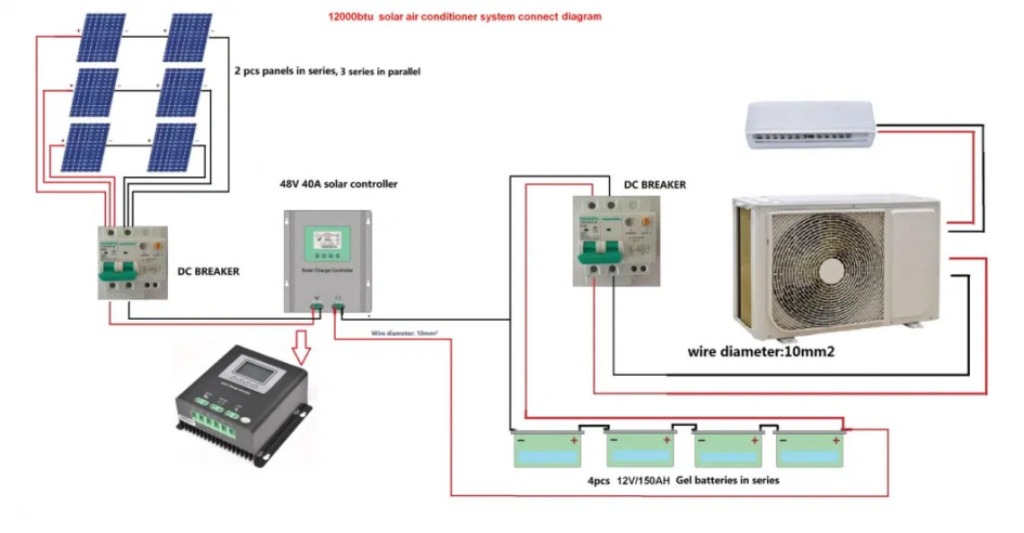
In addition to the above defects, the cost of solar air conditioners themselves is also very high. Taking a 12000Btu solar air conditioner as an example, the channel price of an AC/DC switching air conditioner is about US$500. The overall channel price of a low-voltage DC air conditioner plus a battery is about US$750. Basically, the price of a solar air conditioner is equivalent to the price of 2-3 ordinary air conditioners. At this cost, it is impossible to popularize it in ordinary households.
How to Make Users Accept Solar Air Conditioner?
If home appliance brands want users to buy solar air conditioners like ordinary air conditioners, or even give up ordinary air conditioners to buy solar air conditioners, they need to solve the following problems:
- Significantly reduce the price of solar air conditioners.
If the price of solar air conditioners is not much higher than ordinary air conditioners, users with rigid needs are willing to pay a higher price to buy them. Even users without rigid needs will buy them;
2. It must be really power-saving.
As we all know, solar energy is unstable. When the solar power is low, the air conditioner needs to switch to the mains, which wastes solar energy and generates mains costs. If we can solve this problem , the solar air conditioner can reflect its true value;
3. Add an energy storage interface.
This new configuration can use air conditioners when there is no electricity or light.However, the energy storage capacity needs to be smaller. After all, it is not the main energy source, so the cost of energy storage needs to be reduced.
Why E-Hybrid Solar Air Conditioner Will Become More Popular
The E-Hybrid solar air conditioners are powered by the E-Hybrid tech, AC & DC coupled power supply, not AC/DC switching.
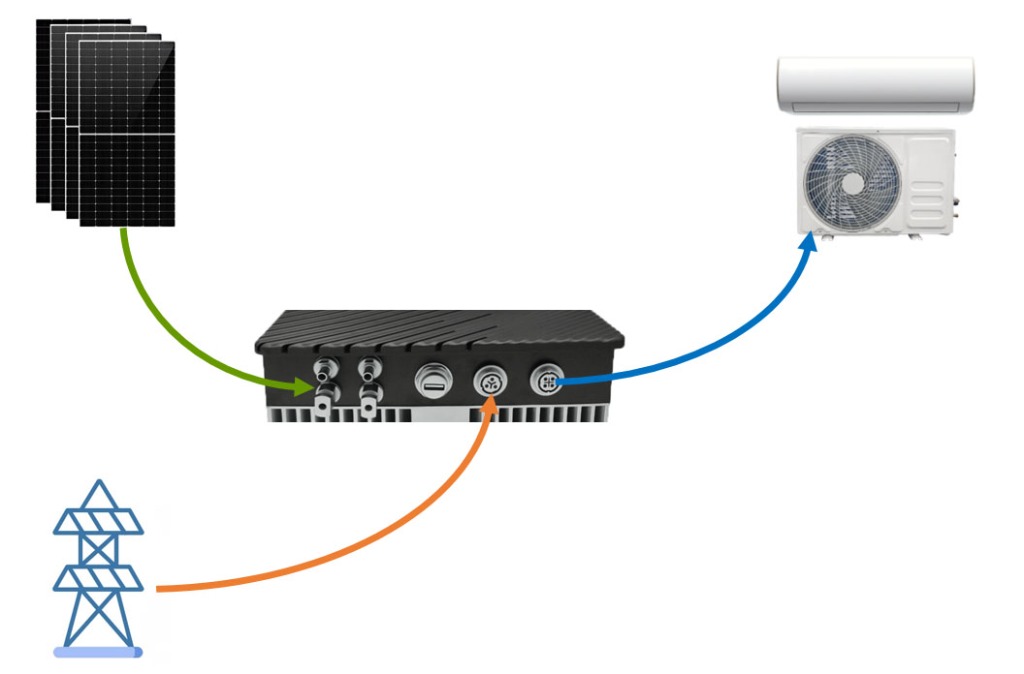
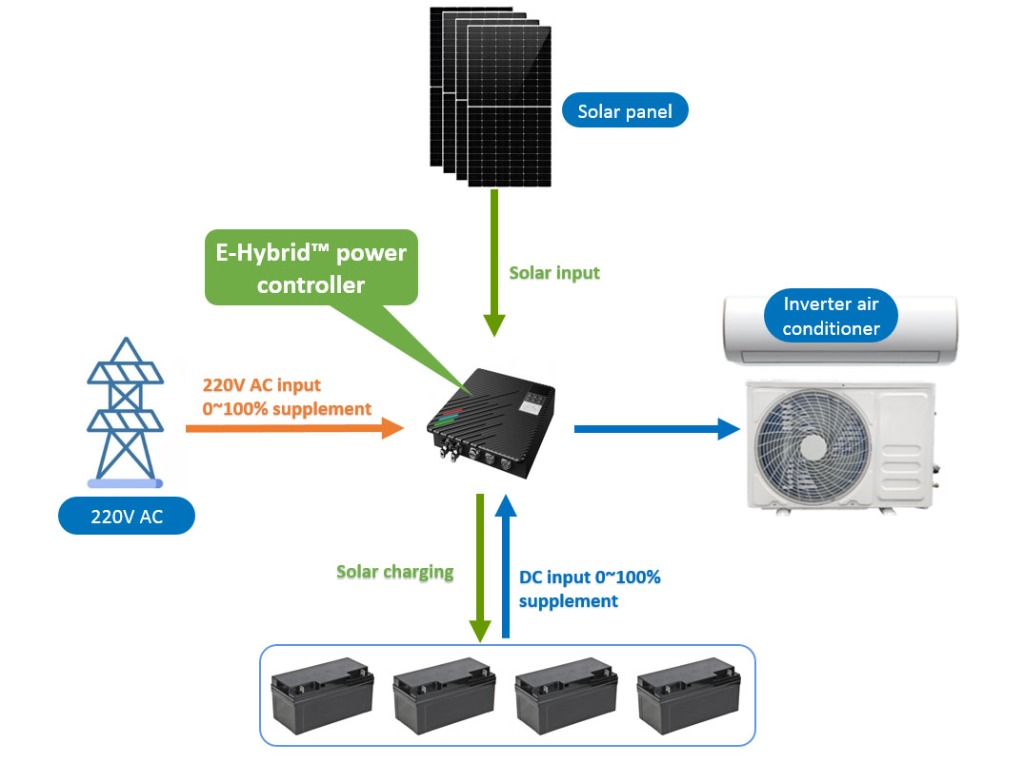
In order to make E-Hybrid solar air conditioner popular, we give it 4 core features and advantages:
- Extremely Energy-saving: Solar energy, AC mains, and battery complement each other. Solar energy and battery are prioritized, and almost no mains are used;
- Never Stop: Solar energy is prioritized.Energy storage is added, and it complements solar energy and AC mains. It can run almost 24 hours without mains.
- Low price: The price of our E-Hybrid solar air conditioner is only slightly higher than ordinary air conditioners. Most users can afford it.
- Strong Versatility: It can be used only by connecting to AC mains. Even if you dont have solar panels, you can buy E-Hybrid solar air conditioner and make plans for the future.
Related Products