Mouvement HF
Traditional Solar Appliances
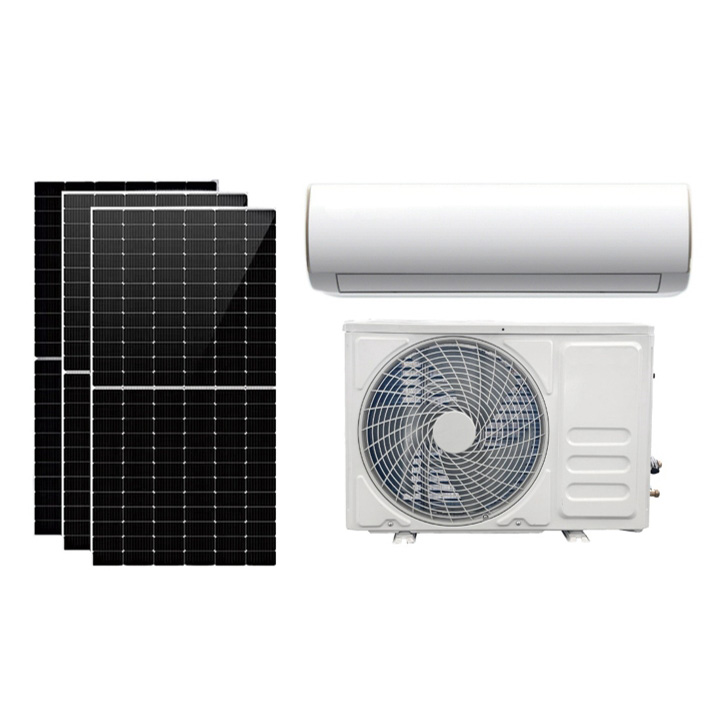
Areas lacking electricity have a large market for inexpensive solar-powered appliances. These typically need just a 12V or 24V solar panel. The panel can power a battery or connect directly to an appliance with a low-voltage DC input. Using such appliances directly solves many families’ emergency power needs to some extent.

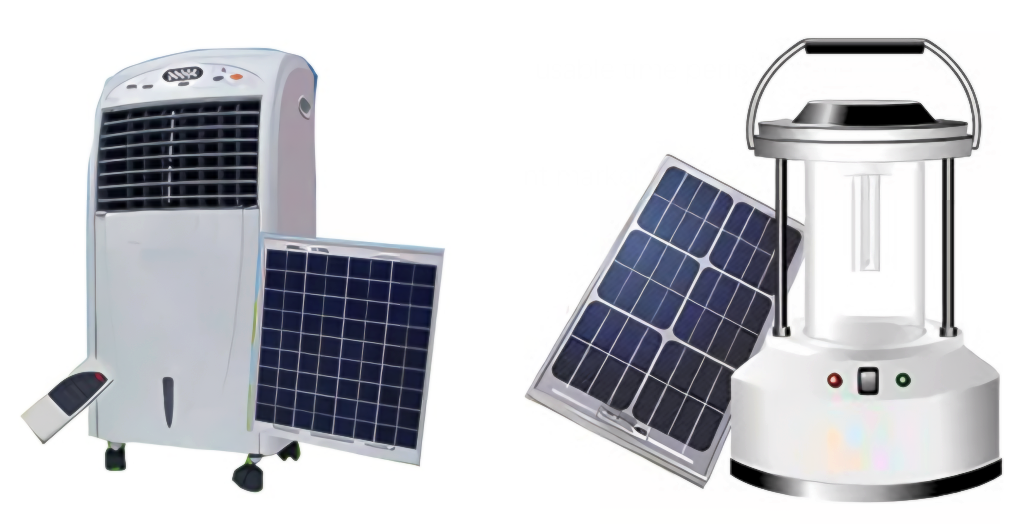
Cependant, this type of solution also has many problems. Their output stability, usable time period, user experience, and reliability are far less than stable mains power.
Traditional low-voltage solar systems mainly come in two types on the current market:
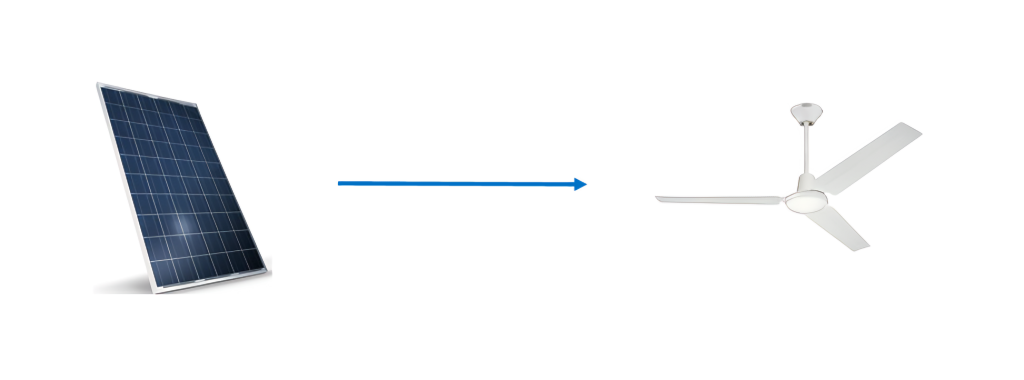
1. Solar panels are directly connected to low voltage DC appliances.
Disadvantages of this solution:
- Without MPPT, it is easily affected by sunlight conditions and the output power is extremely unstable;
- Without energy storage, it cannot be used at night or on rainy days;
- Only suitable for one solar panel corresponding to one appliance.
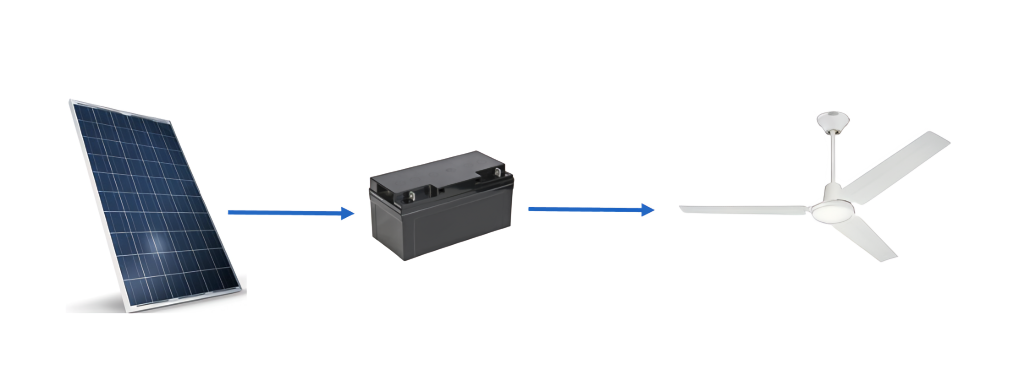
2. The solar panel charges the battery and then output to the low voltage DC appliance.
It somewhat solves the problem of unstable power output. The system can also be used for a period when sunlight is not available.
Cependant, the following problems still exist:
- Since solar energy must go through the battery, it is frequently charged and discharged, et la durée de vie de la batterie est courte;
- The battery capacity needs to be larger, which brings about a sharp increase in cost;
- Solar charging and electrical appliance operation cannot be performed at the same time.
E-Hybrid DC Power Supply
Solving the Problem of Power Supply in Areas with Power Shortages
Fixing traditional solar systems’ weaknesses with common solutions like MPPT controllers and larger batteries makes costs very high.
Instead, we can rethink things. Solar energy skips the battery and runs appliances directly, charging the battery only when necessary.
This is equivalent to adding a “commutator” to the energy, which can solve all the problems of traditional low-voltage solar systems.
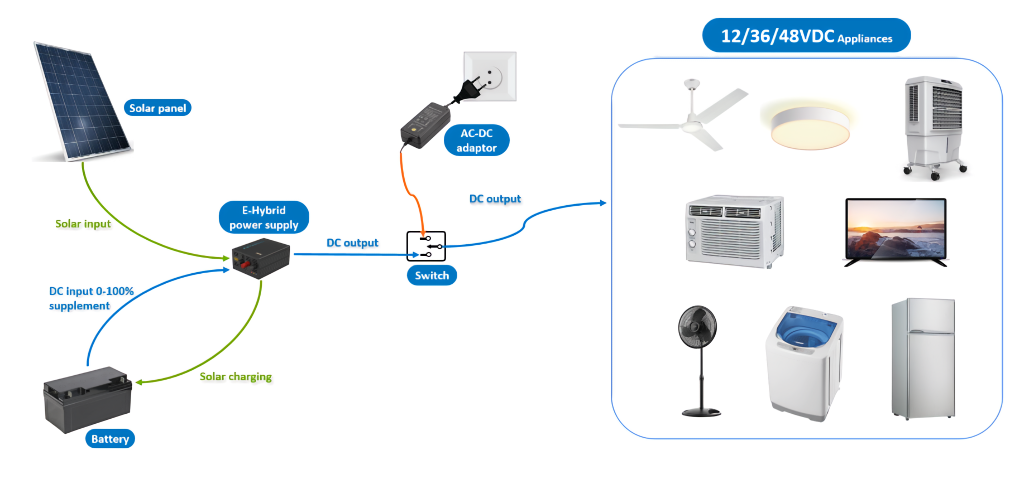
E-Hybrid low-voltage solar products embody this solution. Their core is the E-Hybrid energizer. It has: an MPPT controller, solar direct drive, complementary solar/battery input, and solar charging modules.
Through it, the system can achieve the following operating modes:
- When the Solar power is equal to the loads, solar power will directly drive the loads.
- When the Solar power is higher than the loads, excess power will charge the battery.
- Quand il n'y a pas de charges, l'énergie solaire ne fera que charger la batterie.
- Lorsque l'énergie solaire est insuffisante, battery output will join in automatically and supplement the missing part of power.
- AC power and battery supplement based on the real-time solar power generation and power of the loads
E-Hybrid Power Supply for Household Applications
The E-Hybrid energizer outputs 500W. This can power most home appliances. The system maintains steady output matching load demand despite solar fluctuations. AC grid power is only needed for extended dark, rainy stretches when solar provides nothing and the battery runs low.

Features and benefits
- Taux d'utilisation d'énergie solaire élevée
- E-Hybrid tech adaptive dynamic complementary output
- Contrôleur MPPT intégré
- Stabilisation automatique de la tension
- Sortie de sortie stable
- Puissance de pointe élevée
- Extended battery life
- Solaire + battery power capacity doubled
- Pas de peur de la panne de courant
- Non limité par la lumière du soleil insuffisante
- 24V 500W for One-multi drive
- Applicable for both AC or DC appliances
Produits connexes