حركة التردد العالي
Aquatic Product Consumption Trends
According to news from the Food and Agriculture Organization of the United Nations on August 17, the “State of World Fisheries and Aquaculture 2022” report released by the organization predicts that total fisheries and aquaculture production (excluding algae) is expected to continue to grow, الوصول 202 million tons in 2030, compared with in 2020, it will increase by 14%, and the absolute quantity will increase by 24 million tons.
The report states that per capita apparent consumption of aquatic food is expected to reach 21.4 kilograms in 2030, higher than the level of 20.2 kilograms in 2020; per capita aquatic food consumption will show an upward trend in all regions. The fastest growth is expected in Oceania (12%), followed by the Americas (9%), Asia (7%) and Europe (6%).
Aquatic foods occupy an important position in human dietary structure. Compared with livestock and poultry meat, they have higher protein content and lower saturated fat content. Some aquatic products contain Omega-3 fatty acids, which are beneficial to heart health. In the context of overnutrition in modern people, increasing the proportion of aquatic products and reducing the proportion of poultry, livestock and meat in the dietary structure is more beneficial to health.
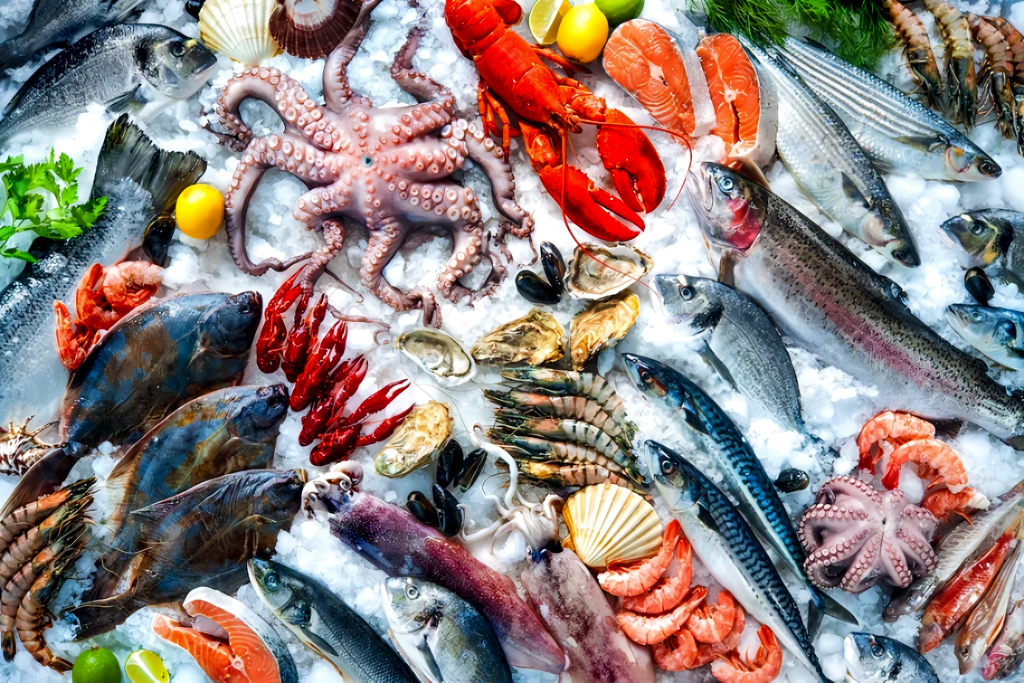
Source Structure of Aquatic Products
According to the “State of World Fisheries and Aquaculture 2022” report, about 59% of aquatic foods for human consumption in 2030 are expected to come from aquaculture, up from 56% في 2020. Taking China as an example, the per capita annual consumption of aquatic products reaches 41kg (including direct consumption, food industry and other industrial products, إلخ.). According to relevant research calculations by the “Medium and Long-term Growth” research group of the Development Research Center of the State Council, China’s demand for aquatic products will reach 85.23 million tons by 2023, an increase of 35% over 2013. This is consistent with the 6,600-ton aquatic product output target in the “Agricultural Modernization Plan” Compared with 10,000 tons, there is a gap of 19.23 million tons.
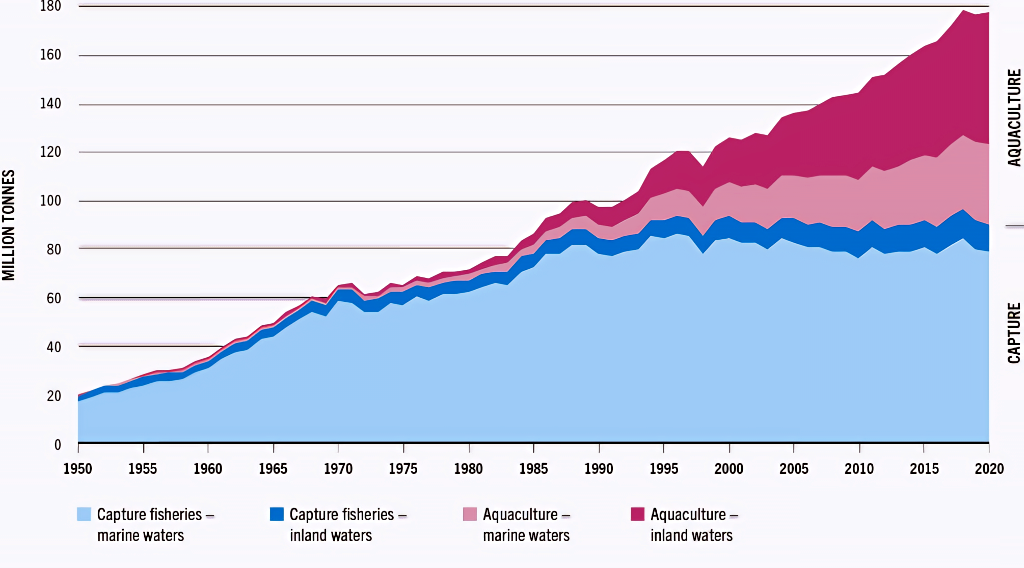
Due to the growth of population and the increase in the consumption of aquatic products, the phenomenon of overfishing of aquatic products has gradually become serious. The fishing rate exceeds the natural regeneration rate of aquatic life, thus threatening aquatic biological resources and causing an ecological crisis. علاوة على ذلك, fishing efficiency decreases and costs increase. The gap caused by the consumption of aquatic products needs artificial breeding to make up for it. Like livestock and poultry farming, artificial breeding is the only method when demand is high.
Current Status of Aquaculture Aeration
The aquaculture industry is currently mainly concentrated in Southeast Asia, where water resources are sufficient, the climate affects the growth of aquatic life, and the species are diverse.
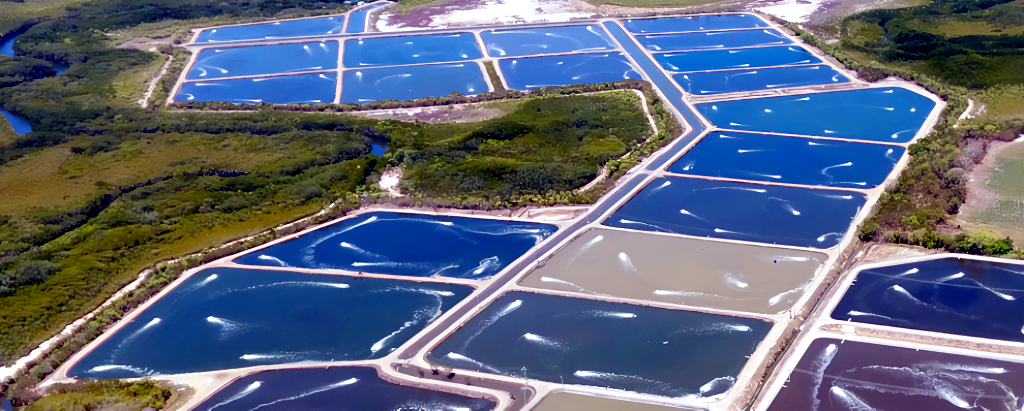
Aquaculture sites generally choose natural seas, rivers, lakes, and artificial ponds. In order to facilitate management, disinfection and feeding, most aquaculture practitioners will choose artificial ponds. Compared with traditional fishing, artificial breeding usually has higher production efficiency and higher density than natural growth environment, so the cultured aquatic organisms are also more susceptible to hypoxia.
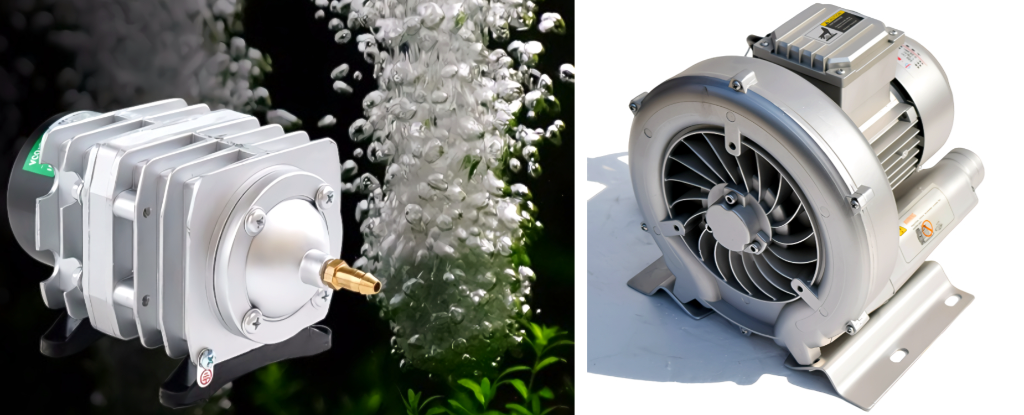
In order to avoid hypoxia, an aerator is an indispensable piece of equipment in the aquaculture industry. There are three main types of aerators:
- Using an impeller to stir or lift water to expand its contact area with air and dissolve more oxygen into the water, and accelerate the exchange of water bodies in different regions:
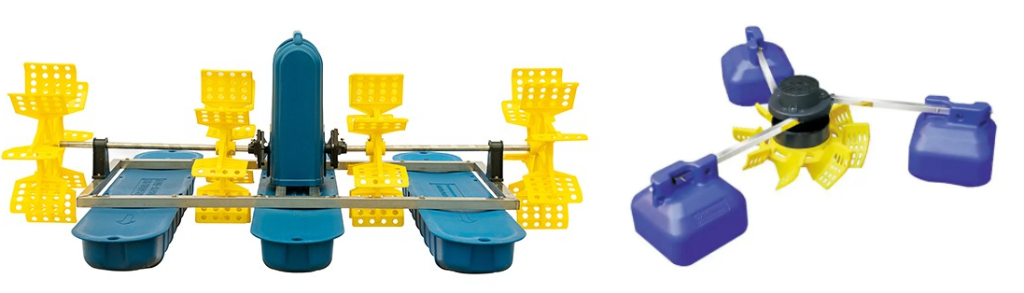
2. The pump is used to accelerate the water to form a jet, which increases the flow speed of the water and brings more water into contact with the air

3. Use an air pump or blower to inject air from the bottom of the water to dissolve oxygen in the water:
Aeration power consumption
These three types of aerators can all achieve the purpose of oxygenation. When the breeding density is high, the aerator needs to be turned on 24 ساعات في اليوم, using energy consumption costs in exchange for breeding efficiency and output.
Taking 5 acres of water pond as an example, if 3,000 fry are placed, two of 1.5KW aerators are standard. If the breeding density reaches 5,000 fry, 1-2 additional aerators are required. If the water depth exceeds 2.5 meters, an underwater air pump aerator needs to be added. If the breeding area is very large, a waterwheel-type aerator needs to be added to form an exchange of water bodies in different areas.
Assuming there are four of 1.5KW aerators in 5 acres of breeding water, running 20 ساعات في اليوم, the annual electricity consumption cost is about USD2,300, which is a large operating cost. If there is a sudden power outage, aquatic organisms may die due to lack of oxygen in large areas, causing huge losses.
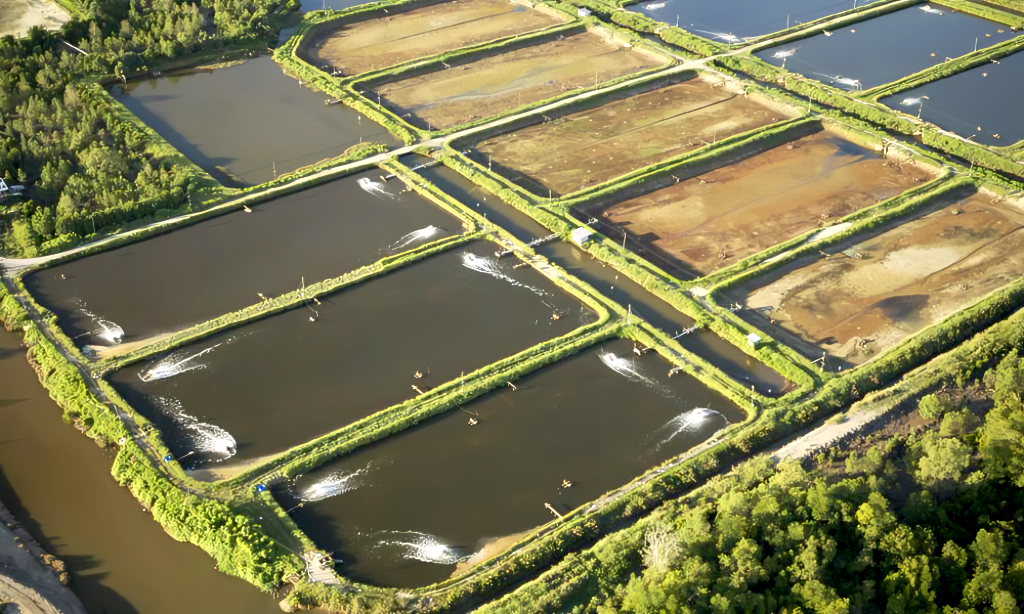
If solar energy is used to drive the aerator, the energy cost of the aerator can be reduced to a certain extent. لكن, according to feedback from users in the aquaculture industry, solar-powered aerators are not practical due to the fundamental problem of unstable solar energy and have will the following problems:
- Solar power drive only, power is not stable;
- عندما تكون الطاقة الشمسية غير كافية, the aerator slows down or stop;
- Anoxic death of aquaculture organisms;
- Not suitable for aquaculture use.

The Developed Unique and Efficient Solar Aerator
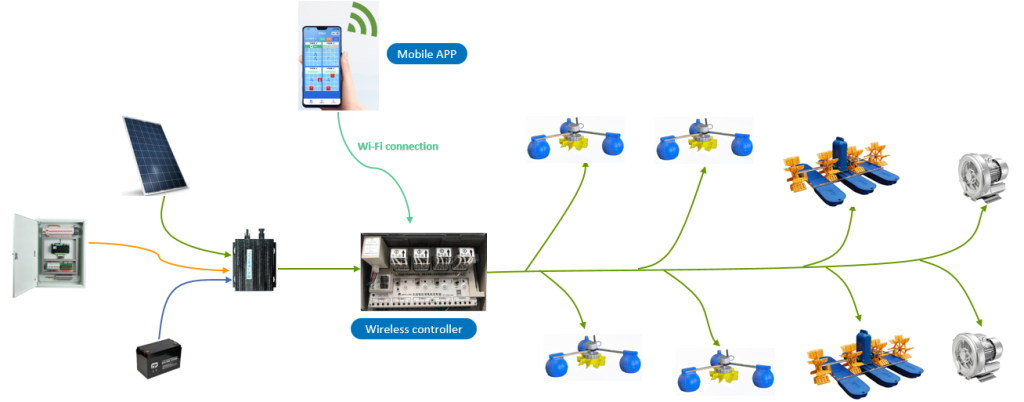
The application of E-Hybrid high-efficiency solar technology has caused many industries to abandon traditional solar systems, reducing energy consumption costs by 30~50% based on the traditional solar system, and the output is stable, regardless of sunlight or no sunlight, aerators all have stable rotational speeds. التكنولوجيا الأساسية لها, الوحدة الهجينة الإلكترونية, يسمح بالطاقة الشمسية, تيار مستمر, and batteries to be output in parallel and drive the motor, and complement each other in real time based on the power fluctuations of solar power generation.
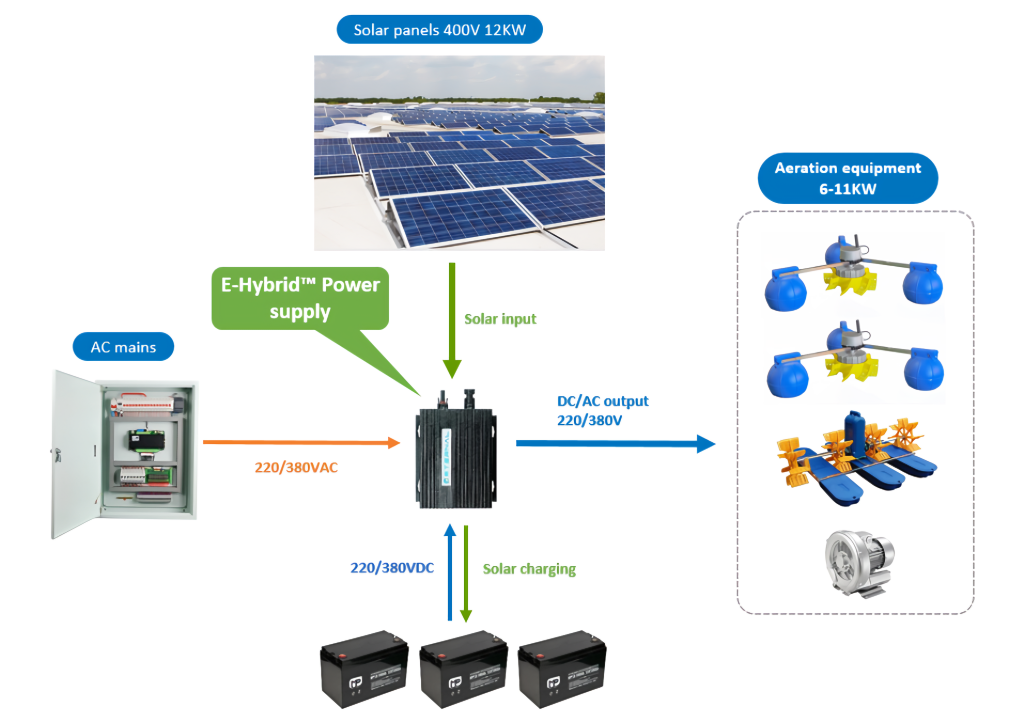
Compared with traditional solar systems, it has the following features and advantages:
- نطاق الطاقة: 2.2-30KW
- جهد الخرج: 220/380الخامس; DC/AC
- ناتج الطاقة المستقر في الصباح, مساء, وفي الأيام الغائمة.
- توفير تكاليف الطاقة
- لا فقدان العاكس
- استثمار أقل
- عمر بطارية طويل
- معدل استخدام الطاقة الشمسية 30% أعلى من الحلول العادية.
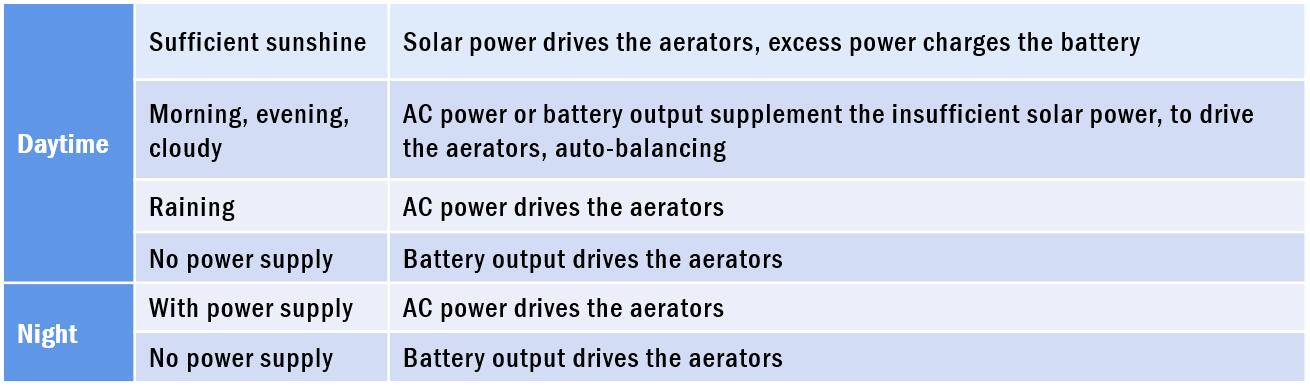
During weather changes from morning to evening, sunny to rainy days, and changes in power supply, E-Hybrid power supply always maintains stable power output, and various energies automatically complement each other. For various scenarios throughout the day, it has the following operating modes:
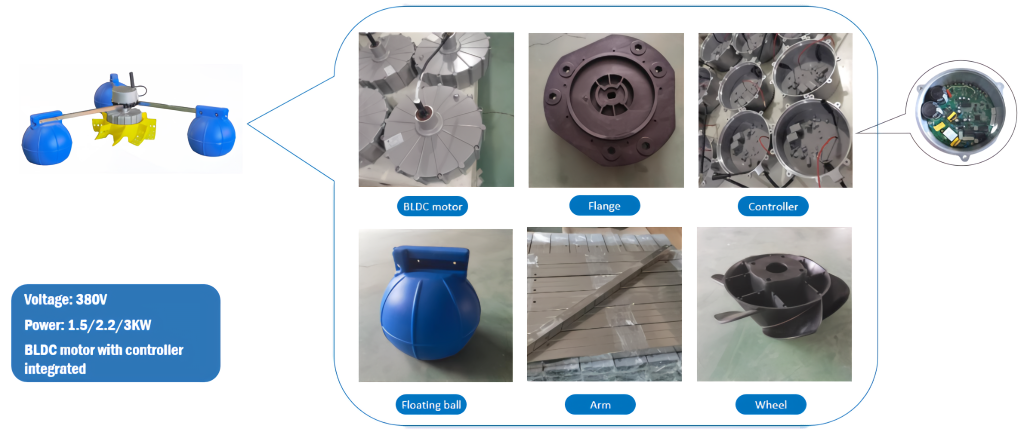
This type of aerator system consists of solar panels, E-Hybrid energy supply (including MPPT module), BLDC motor and controller, impeller, float ball and bracket. We provide complete product systems and supporting accessories.
Smart Aquaculture
In addition to efficient solar technology, our expertise is BLDC motors and controllers. The motor and controller specially developed by us for the aerator are efficient, energy-saving, stable, and have rich control functions. It can better cooperate with E-Hybrid power supply and provide users with a better experience.
This system can also be used with the mobile APP system to achieve remote control, management of multiple fish ponds and aerators, stepless speed regulation, monitoring of aerator operating status, water oxygen content and water temperature monitoring, making aquaculture easier, and with lower operating costs.